COLD CHAIN | INDUSTRY FOCUS | REFINING & PETROCHEMICALS
The Cold Chain Blind Spot Nobody Talks About
India is pouring US$ 37 billion into petrochemicals. A quiet temperature gap is eating into the returns.
By Akash Agarwal — Crystal Group
India is in the middle of a petrochemical boom — US$ 37 billion of planned investment, enough to supply a third of the world’s new capacity by 2030. But running quietly through all that ambition is a flaw almost nobody is costing in: the cold chain.
When people hear “cold chain,” they think food and vaccines. Yet every refinery and chemical plant handles temperature-sensitive material too — and most of it sits in conditions it was never built to survive. Catalysts soaking up humidity. Specialty additives cooking in open storage. Lab samples degrading before they reach the bench. It’s real, it’s everywhere, and it’s expensive.
Temperature control isn’t just a pharma problem. In refining, the integrity of your catalyst is the integrity of your process.
What actually needs cooling?
A refinery looks like the hottest place on earth — flare stacks, steam, reactors. But tucked inside it are materials that need the opposite:
Catalysts: moisture-sensitive and quietly losing activity before they ever hit the reactor.
Lab & QC samples: a sample that warms up in transit gives you a wrong answer — and a compliance headache.
The cost hiding in plain sight
Picture a high-performance hydrocracking catalyst. It crosses an ocean in a perfectly chilled container, clears customs at JNPT — and then bakes for weeks in a non-refrigerated shed, a warehouse with no climate control, a truck with no insulation, in Mumbai air that routinely breaches 38°C.
By the time it reaches the reactor, it’s already lost activity. The plant never knows the number. They just notice run lengths are shorter, selectivity is below the datasheet, and the next purchase order lands sooner than planned. Multiply that across dozens of plants and the leak runs into hundreds of crores.
The question isn’t whether your chemicals need a cold chain. It’s how much you’re already losing without one.
The fix is modular — and fast
The good news: solving this doesn’t need a greenfield project. Containerised cold chain has matured into a plug-and-play answer.
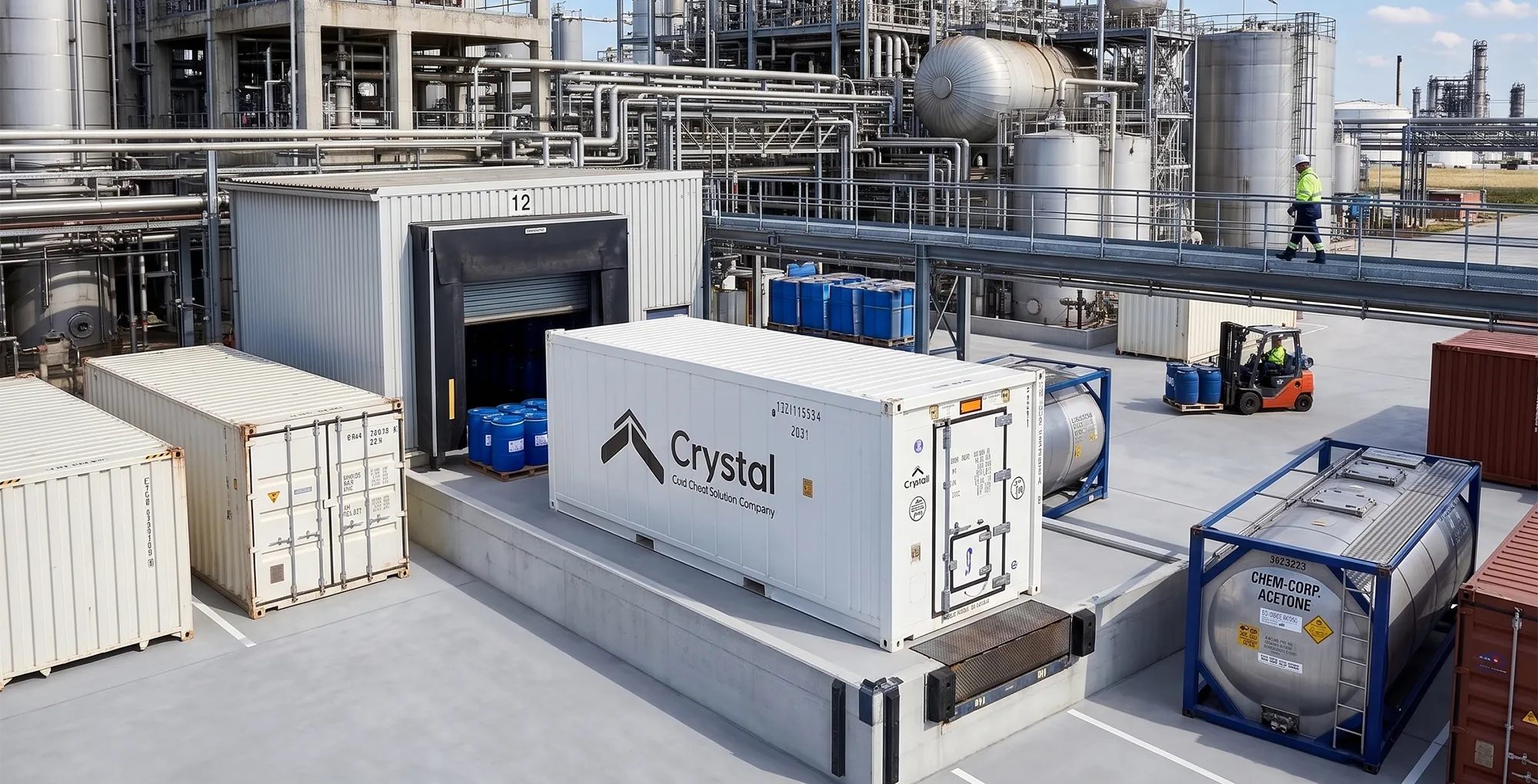
Reefer containers drop onto a plant site in days, no civil work, holding anywhere from -25°C to +25°C. Two or three of them can protect crores of catalyst. Blast freezers pull warm, unstable feedstock down fast. Modular cold rooms slot into existing infrastructure and grow as you do. Bring capacity in for a catalyst changeout, scale it down after — asset-light, exactly the capital discipline plants already apply everywhere else.
A wide-open opportunity
US$ 37B
Planned petrochemical capex by 2030
US$ 64B
India’s specialty chemicals market
8,000+
Cold stores — almost none industrial
New refinery-petrochemical complexes at Ratnagiri and beyond. A US$ 64 billion specialty chemicals sector. Bio-refineries moving from pilot to scale. The thermal demand is coming — and the players who build for it early will own the white space.
For plant operators, the ask is simple: put temperature into your material specs, your vendor evaluations, your storage planning. Getting it right is a rounding error next to the cost of getting it wrong.
India is building world-class petrochemical capacity. It’s time to build a world-class cold chain to match.
The infrastructure exists. The technology is proven. The economics work. What’s missing is awareness. It’s time the cold chain conversation moved from the food aisle to the refinery gate.