Home » Blogs » When 1% of Containers Disrupts 100% of Cold Chain Confidence
When 1% of Containers Disrupts 100% of Cold Chain Confidence

When 1% of Containers Disrupts 100% of Cold Chain Confidence

Most people think the Strait of Hormuz crisis is about oil.
But here’s the uncomfortable truth:
Cold chain is getting hit harder — just silently.

The Real Situation (As of 20th March 2026)

  • Nearly 2,000 commercial ships are currently stranded in or around the Gulf region (Reuters)
  • Over 1,000 ships stuck + 500 waiting outside the Gulf corridor (The Times)
  • Around 150+ vessels anchored due to security risks (Wikipedia)
  • Container diversions have surged +360% since the crisis began (The Economic Times)
  • Shipping traffic through the Strait is down ~80% (rankpy.com)
Now here’s the part most people are missing:
👉 Even though only 2–3% of global container volume moves through this route (Freightos)
The impact is disproportionately high.Because this region is a temperature-sensitive cargo hub.

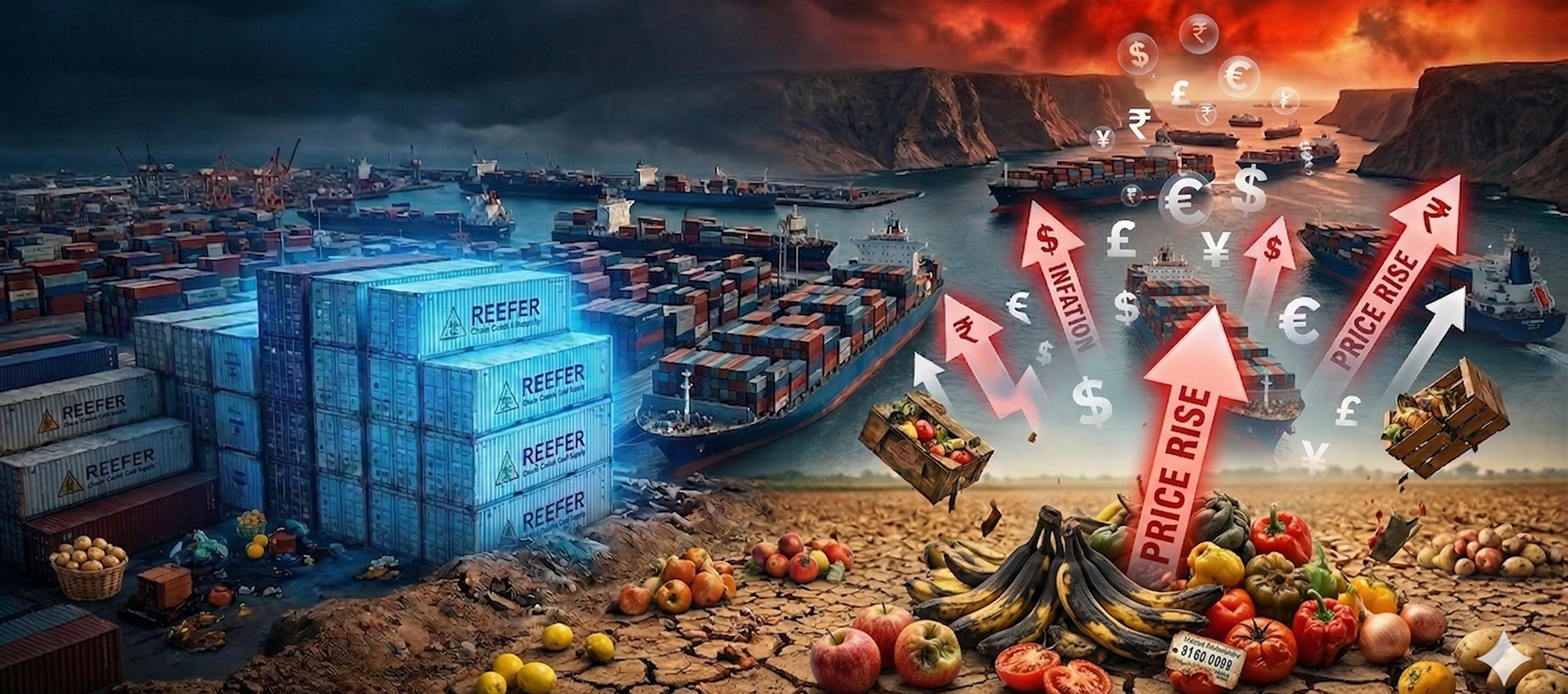
The Invisible Crisis: Reefer Containers Are Stuck — Not Delayed

Cold chain doesn’t behave like dry cargo.
  • Dry container → delay = inconvenience
  • Reefer container → delay = product damage
Right now:
  • Refrigerated food shipments are stranded and at risk of spoilage (Yahoo Finance)
  • Pharma and perishable cargo are facing severe delays and rerouting challenges (Financial Times)
And unlike normal cargo…
This is not a delay problem. This is a degradation problem.

Freight Rates Are Not Rising — They’re Exploding

Let’s talk numbers:
  • Reefer/container freight surcharge: +$3,800 per container (Maersk)
  • War-risk surcharge: $1,500 per TEU (rankpy.com)
  • Some routes: $1,500 → $6,000 per container (4x increase) (Financial Times)
  • Oil crossed $100+ per barrel, increasing overall logistics cost (rankpy.com)

The Farmer Impact No One is Talking About

This is where it gets serious.
Cold chain disruption doesn’t start at ports. It starts at farms.

Why This Crisis is Worse Than COVID for Cold Chain

During COVID:
  • Demand dropped
  • Supply chains slowed
Demand is stable
  • Demand is stable
  • But routes are collapsing simultaneously
  • Red Sea disruption + Hormuz blockage
  • Rerouting via Africa adding 10–14 days delay (rankpy.com)
This creates a dangerous combination: Stable demand + unstable logistics = maximum pressure on cold chain

The Strategic Shift (What Smart Companies Are Doing)

This is where the winners are separating.

Conclusion: The Silent Crisis Few Are Talking About

While headlines focus on oil tankers and naval movements, a quieter crisis is building beneath the surface.
Because the biggest realization is: You cannot control geopolitics. But you can control your cold chain resilience.

Final Thought: The Most Dangerous Assumption

Most businesses still believe:“Once the situation stabilizes, everything will normalize.”But here’s the reality:
This is not a temporary disruption. This is a structural shift in global cold chain logistics.
In a world where routes can shut overnight, cold chain cannot depend on movement alone. It must depend on preparedness.
Partner with Crystal Group

The goal is no longer just cold storage, it’s a smart, sustainable, optimized cold chain for a growing India. 

Contact Us

We will get back to you within 24 hours.

Please enable JavaScript in your browser to complete this form.